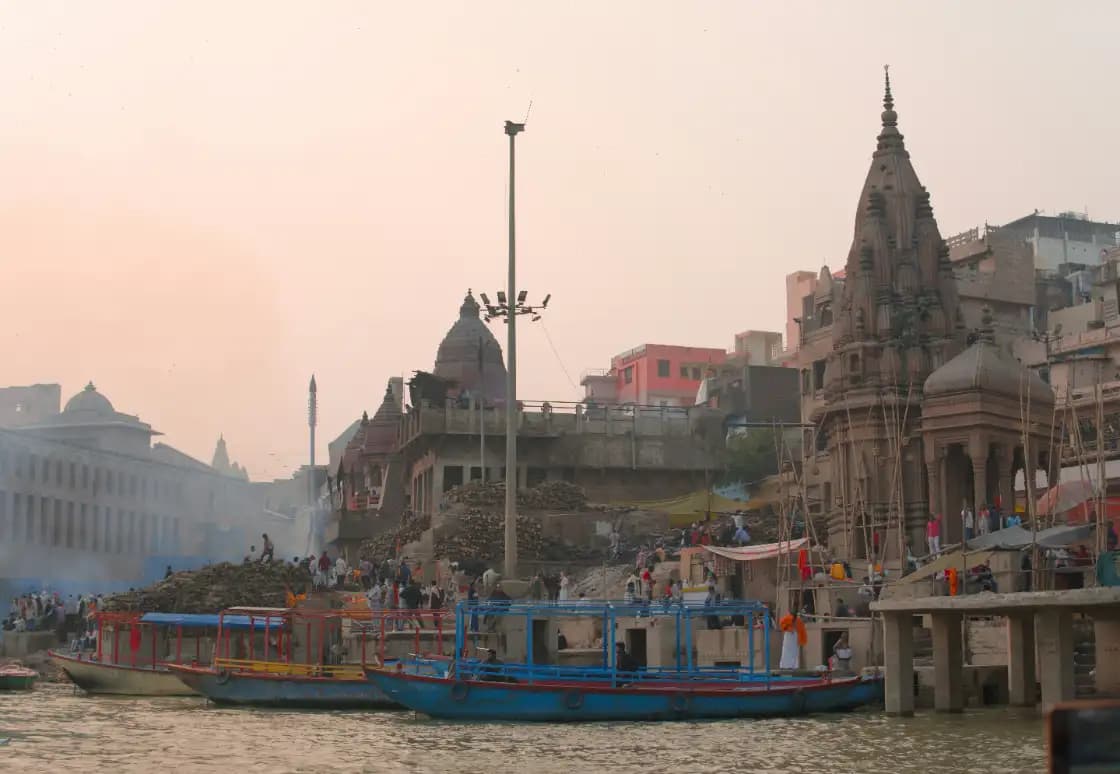

Just a 10-minute walk south of Manikarnika, Dashashwamedh Ghat hosts the world-famous Ganga Aarti ceremony every evening at sunset. Seven priests perform a synchronised fire ritual with large brass lamps, accompanied by chanting and bells. Arrive 45 minutes early to secure a good viewing spot on the steps, or watch from a boat on the river.
01Introduction
Manikarnika Ghat: Where Death Meets Liberation on the Banks of the Ganges
Why This Guide Exists
Manikarnika Ghat is not a tourist attraction. It is the holiest cremation ground in Hinduism — a sacred site where 80 to 300 cremations take place every single day, the funeral pyres burn around the clock, and grieving families perform the most intimate rituals of their lives in full public view. Every year, thousands of travellers — Indian and foreign — visit this ghat on the banks of the Ganges in Varanasi. Most arrive unprepared. Some take photographs they shouldn't. Some fall for scams. Some leave disturbed because nobody told them what to expect. This guide exists so you don't become one of them.
What Is Manikarnika Ghat?
Manikarnika Ghat is the principal cremation ghat in Varanasi (also known as Kashi or Banaras), located on the western bank of the River Ganges. It is considered the most sacred cremation site in all of Hinduism. The belief is absolute — anyone cremated at Manikarnika attains moksha, liberation from the endless cycle of birth, death, and rebirth (samsara). This is why families bring their deceased loved ones from across India to be cremated here. The funeral pyres have been burning continuously for centuries — some say millennia — without ever going out. Not during floods. Not during storms. Not during pandemics. The fire never stops.
This Guide Is For
Select a traveler profile to see its practical budget at a glance.
First-time visitors to Varanasi who want to visit the cremation ghats respectfully
Budget tier, as costed in this guide.
Estimated spend₹1,500 – ₹3,000Per person / day
StaysPer nightHostel or basic guesthouse near the ghats: per night₹500–₹1,200
Food & DrinksPer dayStreet food and local eateries: per day₹300–₹600
IncludedShared boat ride on the Ganges₹100–₹200
IncludedAuto-rickshaw and walking₹100–₹300
IncludedChai and lassi stops₹50–₹100
How to read this
Varanasi is one of India's most affordable spiritual destinations. Whether you are a backpacker or a comfort seeker, the city accommodates every budget. Here is what you can expect to spend per person per day.
Mythology & Significance
The Mythology Behind Manikarnika Ghat: Why This Place Is Sacred
The Lost Earring of the Gods
The name Manikarnika translates to "jewelled earring." According to Hindu mythology, Lord Vishnu created a celestial bathing pond — now known as the Manikarnika Kund — for Lord Shiva and Goddess Parvati. One day, while bathing, Parvati's karna-phool (earring) slipped and fell into the kund. Lord Shiva asked a nearby Brahmin to retrieve it, but the man was tempted by its value and secretly kept it. Enraged, Shiva cursed him: "You and your entire lineage will be the rulers of the shamshan (cremation ground)." That lineage is today known as the Dom Raja — the spiritual gatekeeper of the dead. Kashi is believed to have two kings: the Kashi Naresh (Bholenath/Shiva), the ruler, and the Dom Raja, the keeper of the sacred fire.
The Eternal Flame — Akhand Dhuni
The most striking feature of Manikarnika Ghat is its eternal flame — the Akhand Dhuni — said to have been lit by Lord Shiva himself and burning continuously for thousands of years. Every funeral pyre at this ghat is lit from this sacred flame. The fire is tended by the Dom community, who have performed cremation rituals here for generations. No cremation can begin without fire from the Dom Raja's source. This creates a profound spiritual paradox — a community considered socially marginalised in traditional Hindu caste hierarchy holds the exclusive key to spiritual liberation.
Moksha — The Promise of Liberation
In Hindu philosophy, the ultimate goal of human existence is to escape the cycle of rebirth (samsara). Cremation at Manikarnika Ghat is believed to guarantee this liberation (moksha). It is said that Lord Shiva himself whispers the Taraka Mantra into the ears of those who die in Varanasi, guiding their soul to liberation. This is why Varanasi is called Mahasmashana — the great cremation ground — and why devout Hindus across India wish to have their last rites performed here.
What Happens at Manikarnika Ghat: The Cremation Process You Will Witness
If you choose to visit Manikarnika Ghat, this is what you will see. Understanding the process beforehand helps you observe with respect rather than confusion.
The Arrival
The body, wrapped in a white or saffron shroud and decorated with marigold garlands, is carried through the narrow lanes of old Varanasi on a bamboo stretcher (arthi). The procession is accompanied by the chant "Ram Naam Satya Hai" (the name of God is truth) — a solemn reminder that death is the only certainty.
The Holy Dip
At the ghat, the body is immersed in the Ganges for a final purifying bath. The family believes this cleanses the soul before its journey beyond.
The Pyre
Wooden logs — typically mango or neem wood, sandalwood for wealthier families — are stacked into a pyre. The body is placed on top. Ghee (clarified butter) is applied to aid combustion and symbolise purity.
The Ignition
The eldest son or closest male relative, often with a freshly shaved head, circles the pyre and lights it using fire taken from the eternal flame tended by the Dom community. Mantras are chanted by the presiding priest throughout.
The Commitment to the River
After the cremation is complete, the ashes and remaining bones are collected and immersed in the Ganges. The family begins a period of mourning that lasts 13 days.
Important: This entire process is sacred and deeply personal to the families present. You are witnessing someone's most private moment of grief and devotion. Act accordingly.
Cremation Ghat Etiquette
Cremation Ghat Etiquette: The Rules Every Visitor Must Follow
No Photography. No Videography. No Exceptions.
This is the single most important rule. Do not photograph or film the cremation pyres, the bodies, or the grieving families — not even from a distance, not even from a boat, not even "discreetly" on your phone. This is considered a deep violation of privacy and is extremely disrespectful. Put your camera and phone away completely when you are in the immediate vicinity of the cremation area. Drones are strictly prohibited along the Varanasi riverfront and police regularly seize unpermitted drones.
Dress Modestly
Cover your shoulders and legs. Wear simple, muted clothing — avoid bright colours, flashy accessories, or anything that draws attention to yourself. This is a funeral ground. Dress as you would if attending a funeral in your own culture.
Maintain Silence
Do not talk loudly, laugh, make audible comments, or engage in casual conversation near the pyres. This is not a performance. Families are mourning. Observe in silence or speak only in whispers if necessary.
Maintain Distance from the Pyres and Families
Do not crowd the cremation area or get close to the funeral pyres. Do not touch the bodies, the pyres, or any ritual objects — they are sacred. Find a spot on the steps above the main cremation platforms and observe from a respectful distance. Do not walk between a family and their pyre.
Do Not Interfere with the Rituals
Do not ask questions to the grieving families. Do not interrupt the priests or Dom workers during the cremation process. Do not offer unsolicited help. You are a silent witness — nothing more.
Keep Your Visit Brief
This is not a place to linger for hours, explore every corner, or treat as sightseeing. Visit with humility and limited time. Observe what you need to observe, pay your silent respects, and leave. Ten to twenty minutes is enough for most visitors.
Remove Footwear When Required
If you are near temple areas or sacred zones adjacent to the ghat, remove your shoes. Follow the lead of locals around you.
Children Under 10 Are Not Advised
The intensity of open-air cremations — including visible flames, smoke, ash, and the presence of partially cremated remains — can be deeply distressing for young children. Teenagers are generally fine if accompanied by an adult who can provide context.
Three Ways to Observe Manikarnika Ghat Respectfully
1. By Boat (Recommended for First-Time Visitors)
A boat ride on the Ganges is the most respectful way to observe Manikarnika Ghat, especially for first-time visitors. It allows you to witness the cremation rituals from a safe and non-intrusive distance. Boats are available from Dashashwamedh Ghat or Assi Ghat. Inform your boatman that you wish to observe respectfully — they will steer to an appropriate spot without lingering intrusively. Boat rides cost ₹100–₹500 depending on the type of boat, duration, and time of day. Sunrise and sunset rides offer the most powerful atmosphere.
2. From the Upper Steps (Walking Approach)
You can walk to Manikarnika Ghat through the narrow lanes of old Varanasi. The legal drop-off point for taxis and auto-rickshaws is Maidagin Gate — from there, it's a 200-metre walk through pedestrian-only lanes. Once at the ghat, find a spot on the upper steps above the main cremation platforms. Do not descend to the lower platforms where cremations are actively taking place.
3. From Nearby Rooftop Viewpoints
Some old buildings and guesthouses near Manikarnika Ghat have terrace viewpoints. These are sometimes offered by local Dom workers or guides for a small tip (₹200–₹500, optional). This provides a broader perspective of the ghat without intruding on the ceremonies below.
Pro Tip: A common and rewarding itinerary is to visit Manikarnika Ghat around 4:00 PM on foot, then walk to Dashashwamedh Ghat for the famous evening Ganga Aarti ceremony at sunset.
Scams to Avoid
Common Scams at Manikarnika Ghat — And How to Avoid Them
The "Wood Donation" Scam
This is the most common and most reported scam at Manikarnika Ghat. A man approaches you near the ghat — often with decent English — and claims to collect donations for firewood for poor families who cannot afford cremation. He may show a notebook with large donation amounts (₹5,000–₹10,000) from previous visitors and pressure you to contribute. The money never reaches any family. If you want to make a genuine donation, do so through verified temple trusts — not through individuals approaching you on the street.
The "Free Guide" Who Isn't Free
Someone approaches you offering a "free" cultural tour of the ghat, claiming they just want to share their heritage. They introduce you to a "ghat worker" who shows you around. At the end, the tone changes — you are pressured to buy wood by the kilo or pay a large "voluntary" fee. Decline all unsolicited guides firmly and politely. If you want a guided experience, arrange one through your hotel or a verified tour operator.
The "Hospice Donation" Approach
You may be told about a nearby hospice (Mukti Bhawan) where people come to die in Varanasi, and asked to donate money for its upkeep. While Mukti Bhawan is a real place, the individuals collecting money on the street are not its authorised representatives. Do not hand over cash under emotional pressure.
The "You Cannot Stand Here" Redirect
Men may intercept you claiming it is disrespectful to stand where you are and insist you move to a special "viewpoint" — which they control and charge for. You have every right to stand on the public steps of the ghat. Politely decline and stay where you are.
The Golden Rule
Politely but firmly decline all unsolicited approaches at Manikarnika Ghat. Do not engage, do not negotiate, and do not feel guilty. The families who genuinely need help are not sending strangers to collect money from tourists.
Best Time to Visit
Best Time to Visit Manikarnika Ghat and Varanasi
Peak Season — Best Weather
October – March
The best time to visit Varanasi. Pleasant temperatures between 10–25°C, clear skies, and comfortable conditions for walking along the ghats. This is also festival season — Diwali, Dev Deepawali, and Makar Sankranti fall in this window. Hotels book up fast and prices are higher.
Shoulder Season — Hot but Manageable
March – May
Temperatures soar to 35–45°C. The ghats are less crowded and accommodation is cheaper, but the heat can be physically exhausting, especially in the narrow lanes of old Varanasi where there is no shade or airflow. Early morning visits (before 7 AM) are essential during these months.
Monsoon — Challenging
June – September
Heavy rains cause the Ganges to rise dramatically — the lower steps of most ghats submerge, and cremation platforms at Manikarnika may shift to higher ground. Boat rides can be restricted during high water. The lanes become slippery and harder to navigate. Not recommended for first-time visitors, though the empty ghats have a raw, atmospheric beauty.
How to Reach
How to Reach Manikarnika Ghat — Practical Travel Details
By Air — Reaching Varanasi
Fly into Lal Bahadur Shastri International Airport (VNS), located approximately 25 km from the city centre. Direct domestic flights operate daily from Delhi (1.5 hours), Mumbai (2.5 hours), Bengaluru (2.5 hours), Kolkata (1.5 hours), and Hyderabad (2 hours). IndiGo and Air India operate the most frequent routes. International flights connect from Kathmandu, Bangkok, and Colombo. Airport to ghats by taxi costs ₹600–₹900.
By Train — The Most Popular Option
Varanasi Junction (BSB) is the main railway station, connected to virtually every major city in India. The Vande Bharat Express covers Delhi to Varanasi in approximately 8 hours. The Kashi Vishwanath Express is also popular. Other stations include Banaras (Manduadih) and Pandit Deendayal Upadhyay Junction (Mughalsarai). Book 3AC for ₹700–₹1,700 through IRCTC.
Reaching Manikarnika Ghat from the City
No vehicle can reach Manikarnika Ghat directly. Take a taxi or auto-rickshaw to Maidagin Gate or Godowlia Chowk — both are legal drop-off points. From there, walk the final 200 metres through narrow pedestrian-only lanes. Follow the processions carrying marigold-covered stretchers — they lead to the ghat. Alternatively, take a boat from Dashashwamedh Ghat or Assi Ghat.
Visiting Hours and Timing
Manikarnika Ghat is operational 24 hours a day, 7 days a week — cremation rituals take place round the clock without pause. The best time to visit is early morning (5:00–7:00 AM) or late afternoon (3:00–5:00 PM) when the light is softer, crowds are thinner, and the atmosphere is most contemplative. Avoid visiting during the midday heat (11 AM – 3 PM), especially in summer.
Entry Fee
There is no entry fee or ticket to visit Manikarnika Ghat. It is a public ghat open to all visitors — Indian and foreign. However, be wary of anyone claiming you need to pay for access.
Nearby Attractions
What to Visit Near Manikarnika Ghat in Varanasi
Dashashwamedh Ghat — The Famous Ganga Aarti
Where to stay: Numerous guesthouses and heritage hotels line the lanes behind Dashashwamedh Ghat. This is the most popular area for tourists to stay in Varanasi.
Kashi Vishwanath Temple — The Golden Temple
One of the 12 Jyotirlingas of Lord Shiva, Kashi Vishwanath Temple is located just 300 metres from Manikarnika Ghat in the heart of old Varanasi. The newly built Kashi Vishwanath Corridor connects the temple to the ghats with a wide, accessible pathway. Security is strict — mobile phones and cameras are not allowed inside. Entry is free.
Where to stay: The Vishwanath Corridor area has government-facilitated facilities. Most visitors stay near the ghats and walk to the temple.
Sarnath — Where Buddha Gave His First Sermon
Located 13 km northeast of Varanasi, Sarnath is the site where Gautama Buddha delivered his first sermon after attaining enlightenment. The Dhamek Stupa, Ashoka Pillar, and Sarnath Museum (home to the Lion Capital of Ashoka — India's national emblem) are the main attractions. A half-day trip by auto or taxi (₹300–₹600 one way).
Where to stay: Most visitors base themselves in Varanasi and make a day trip to Sarnath. A few budget guesthouses and monasteries offer accommodation near the ruins.
Assi Ghat — The Calm, Cultural Ghat
Located at the southern end of Varanasi's ghat stretch, Assi Ghat is popular among long-term visitors, students, writers, and travellers seeking a more relaxed atmosphere. Morning yoga sessions, chai stalls, small bookshops, and live music evenings define the vibe here. The subah-e-banaras (morning of Banaras) cultural programme takes place here regularly.
Where to stay: Assi Ghat has the highest concentration of backpacker-friendly hostels, cafés, and rooftop restaurants in Varanasi. It is the most laid-back area to stay.
Harishchandra Ghat — The Other Cremation Ghat
Varanasi's second cremation ghat, smaller and less intense than Manikarnika. Named after the legendary King Harishchandra, who is said to have worked here as a cremation attendant to honour a promise of truth. This ghat also features an electric crematorium alongside the traditional wood-fire pyres. It is generally quieter and less approached by touts, making it a calmer alternative for visitors who want to observe cremation rituals.
Where to stay: Fewer accommodation options directly nearby, but a short walk connects to the main ghat stretch.
Things Nobody Tells You Before Visiting Manikarnika Ghat
The Smell, Smoke, and Air Quality
Manikarnika Ghat is an active cremation ground with multiple pyres burning simultaneously. The air is thick with smoke, ash, and the scent of burning sandalwood and ghee. Visitors with respiratory conditions (asthma, bronchitis) should take precautions — consider wearing a mask or observing from a boat at a distance. This is not a sanitised experience.
You Will See Death Up Close
Bodies wrapped in shrouds are carried through the lanes. Pyres burn openly. Skulls and bones are visible. Ash floats in the air and on the water. If you are not comfortable witnessing death and cremation in graphic, unfiltered form, a boat ride from a distance is the better option — or you may choose to skip the visit entirely. There is no shame in that.
The Lanes Leading to the Ghat
The approach to Manikarnika is through some of the narrowest, most crowded lanes in old Varanasi. Stacks of firewood line the walls. Funeral processions pass through regularly — step aside and let them pass. Cows, dogs, and motorbikes share the same space. It can feel claustrophobic. Keep your belongings close and stay oriented — Google Maps is unreliable in the old city lanes.
Respect the Dom Community
The Dom community has tended the eternal flame and performed cremation rituals at Manikarnika for centuries. Despite their essential sacred role, they occupy a marginalised position in the traditional caste system. Treat them — and everyone at the ghat — with courtesy and dignity. Do not photograph them without permission.
There Are No Official Guides
There is no official ticketing, guided tour system, or visitor centre at Manikarnika Ghat. Anyone claiming to be an "official guide" is freelancing. If you want context and explanation, arrange a guide through your hotel or a verified local tour operator before you arrive.
Explore Varanasi
Continue Exploring Varanasi — Full Destination Guide
Varanasi — The Spiritual Capital of India
One of the oldest continuously inhabited cities in the world, Varanasi is a living museum of Hindu spirituality, ancient ritual, and raw human experience. From the 88 ghats along the Ganges to the narrow lanes filled with silk weavers, temple bells, and street food, every corner of this city pulses with life and death in equal measure. Explore the complete Varanasi travel guide covering all ghats, temples, festivals, food, accommodation, and practical travel tips for 2026.
Common Questions
Quick, practical answers to the questions travellers ask most about Varanasi.
Yes. Both Indian and foreign tourists are allowed to visit Manikarnika Ghat. However, it is a sacred cremation ground — not a tourist attraction. Visitors must follow strict etiquette, maintain silence, dress modestly, and absolutely not photograph the cremation pyres or grieving families.
No. Photography and videography of the cremation process is considered deeply disrespectful and is strictly prohibited. Put your camera and phone away when you are near the cremation area. Drones are also banned along the Varanasi riverfront.
No. There is no entry fee or ticket. Manikarnika Ghat is a public ghat open to all visitors. Be wary of anyone claiming you need to pay for access — it is a scam.
Early morning (5:00–7:00 AM) or late afternoon (3:00–5:00 PM) are the best times. The ghat operates 24/7 with cremations round the clock, but these hours offer softer light, thinner crowds, and a more contemplative atmosphere.
Take a taxi or auto-rickshaw to Maidagin Gate or Godowlia Chowk, then walk the final 200 metres through narrow lanes. No vehicle can reach the ghat directly. Alternatively, take a boat from Dashashwamedh Ghat or Assi Ghat for a river approach.
Yes, the ghat itself is safe. However, be prepared for persistent touts and scammers — especially those offering wood donations, free guides, or hospice donations. Decline firmly and politely. Visit during daylight hours for your first time.
Individuals approach tourists near the ghat claiming to collect money for firewood for poor families who cannot afford cremation. They show a notebook with large donation amounts to pressure you. The money never reaches any family. If you want to donate genuinely, do so through verified temple trusts.
Teenagers accompanied by adults are generally fine. Children under 10 are not advised due to the intensity of open-air cremations — visible flames, smoke, ash, and partially cremated remains can be distressing for young children.
The eternal flame (Akhand Dhuni) is a sacred fire believed to have been lit by Lord Shiva and burning continuously for thousands of years. Every funeral pyre at Manikarnika is lit from this flame. It is tended by the Dom community, who have performed this duty for generations.
Manikarnika Ghat is the holiest cremation ground in Hinduism. It is believed that anyone cremated here attains moksha — liberation from the cycle of birth, death, and rebirth. Lord Shiva is said to whisper the Taraka Mantra into the ears of those who die in Varanasi, guiding their soul to liberation.
Approximately 80 to 300 cremations take place at Manikarnika Ghat every day. The funeral pyres burn 24 hours a day, 7 days a week, without ever stopping — even during monsoons and floods.
Both are cremation ghats in Varanasi. Manikarnika is the larger, busier, and more sacred of the two with a mythology linked to Lord Shiva's earring. Harishchandra Ghat is smaller, quieter, named after the legendary King Harishchandra, and features both traditional wood-fire pyres and an electric crematorium. Harishchandra is generally less crowded and has fewer touts.