Why Northeast India Nature Circuit 2026? Because nowhere else in India puts the world's densest one-horned rhino population, the world's wettest place, bridges grown from living trees over 500 years, and the clearest river in Asia within a single 10-day drive. The Northeast India circuit is the most ecologically and culturally distinct domestic travel experience in India, and it remains significantly under-visited by mainland Indian tourists relative to its extraordinary natural content.
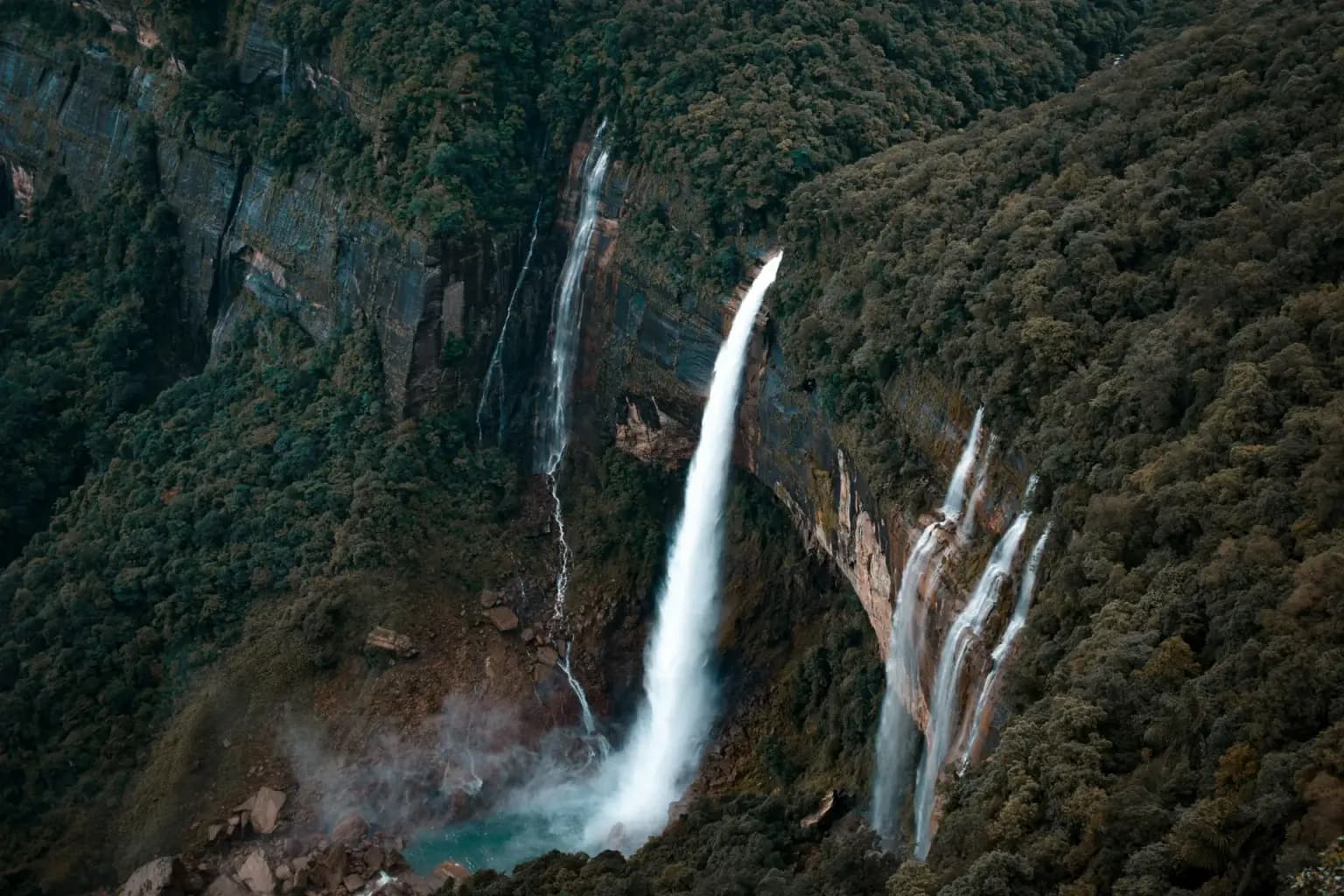
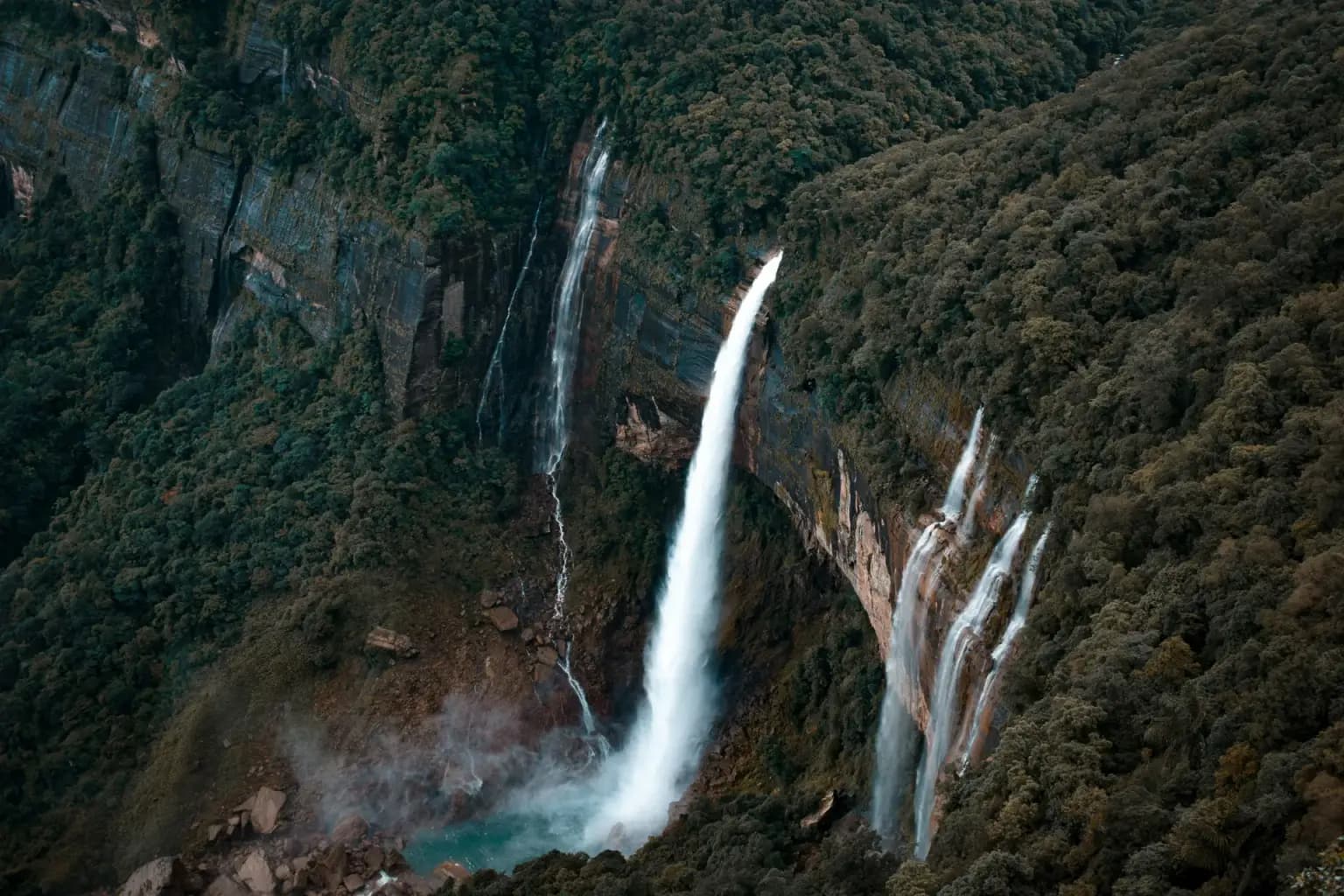
On July 14, 2025, I stood at the viewpoint above Nohkalikai Falls in the full Cherrapunji monsoon. The falls drop 340m free without touching the rock — the water launching from the plateau edge and arriving at the plunge pool in the valley below as a continuous, thundering white column. In July, the monsoon turns this waterfall from impressive to overwhelming — the sound before the falls are visible, the mist 200m before the viewpoint, and the specific blue-green of the plunge pool below that comes from the copper in the rock staining the accumulated water. I have stood at the Chitrakoot and Dhuandhar and Dudhsagar falls. Nohkalikai in July is in a different category. The scale, the free-fall quality, and the monsoon power together make it the most physically affecting waterfall in India.
The Living Root Bridge at Nongriat required 3 hours of descent into the gorge from Tyrna village — 3,200 stone steps, increasingly humid, the jungle closing in above the path. The double-decker bridge appeared suddenly at the bottom of the final descent: two bridges, one 1.5m above the other, both woven from the same tree's root system that has been growing since the 15th century. I stood on the lower bridge and the upper bridge was at eye level. The roots underfoot are not dead wood — they are living tissue, still growing, the bridge still strengthening year by year. The specific experience of standing on something living that is also a functional structure that is also 500 years old has no equivalent in any Indian destination I have visited.