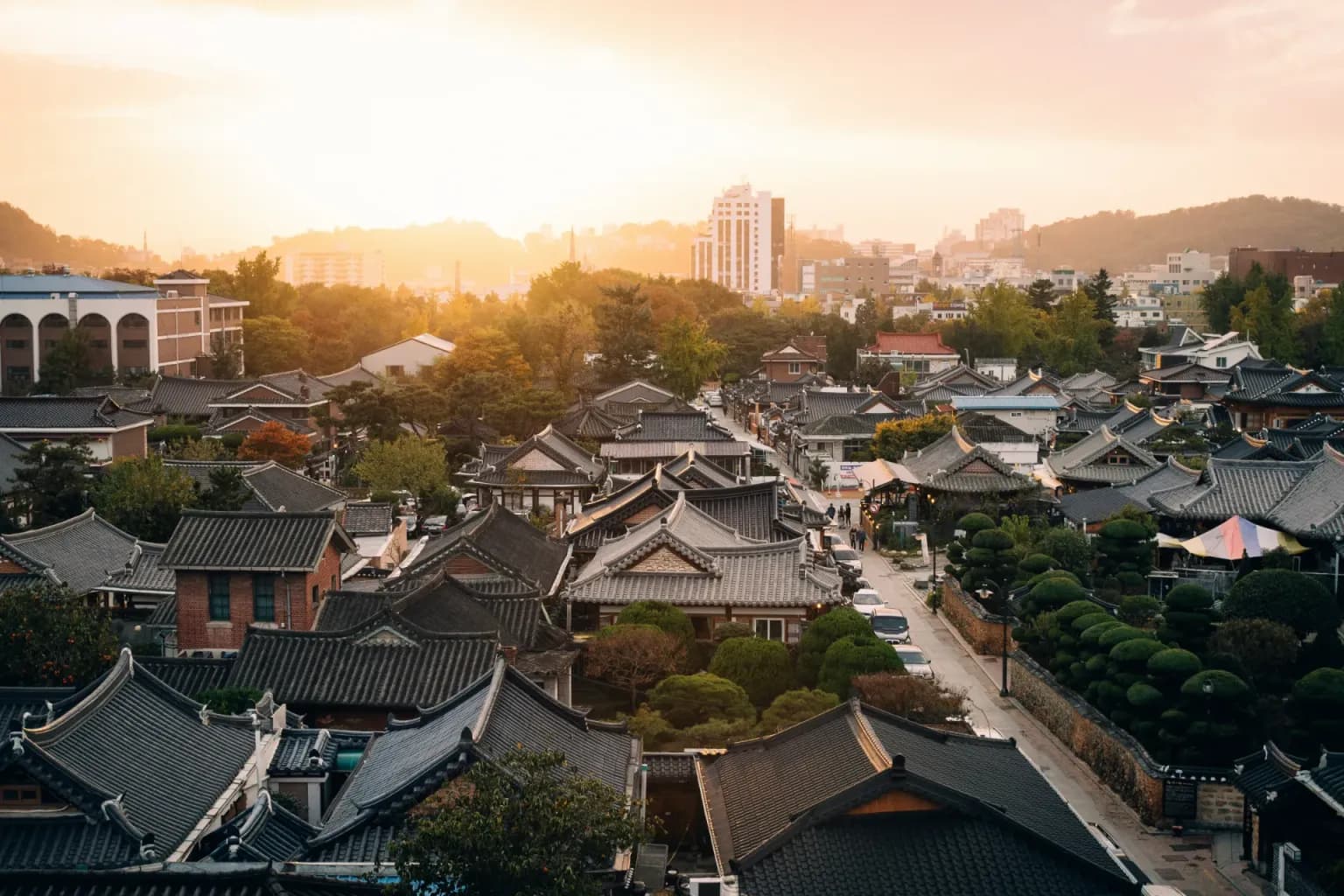
South Korea transitions from winter to spring — the Jeju cherry blossoms open in the first week, Vivaldi Park is still open for skiing in the final weeks, and Seoul has the distinct pre-spring clarity before the April yellow dust. The shoulder-season pricing (20-30% below the April cherry blossom peak) offers the same palaces, temples, and food at lower prices with smaller crowds.
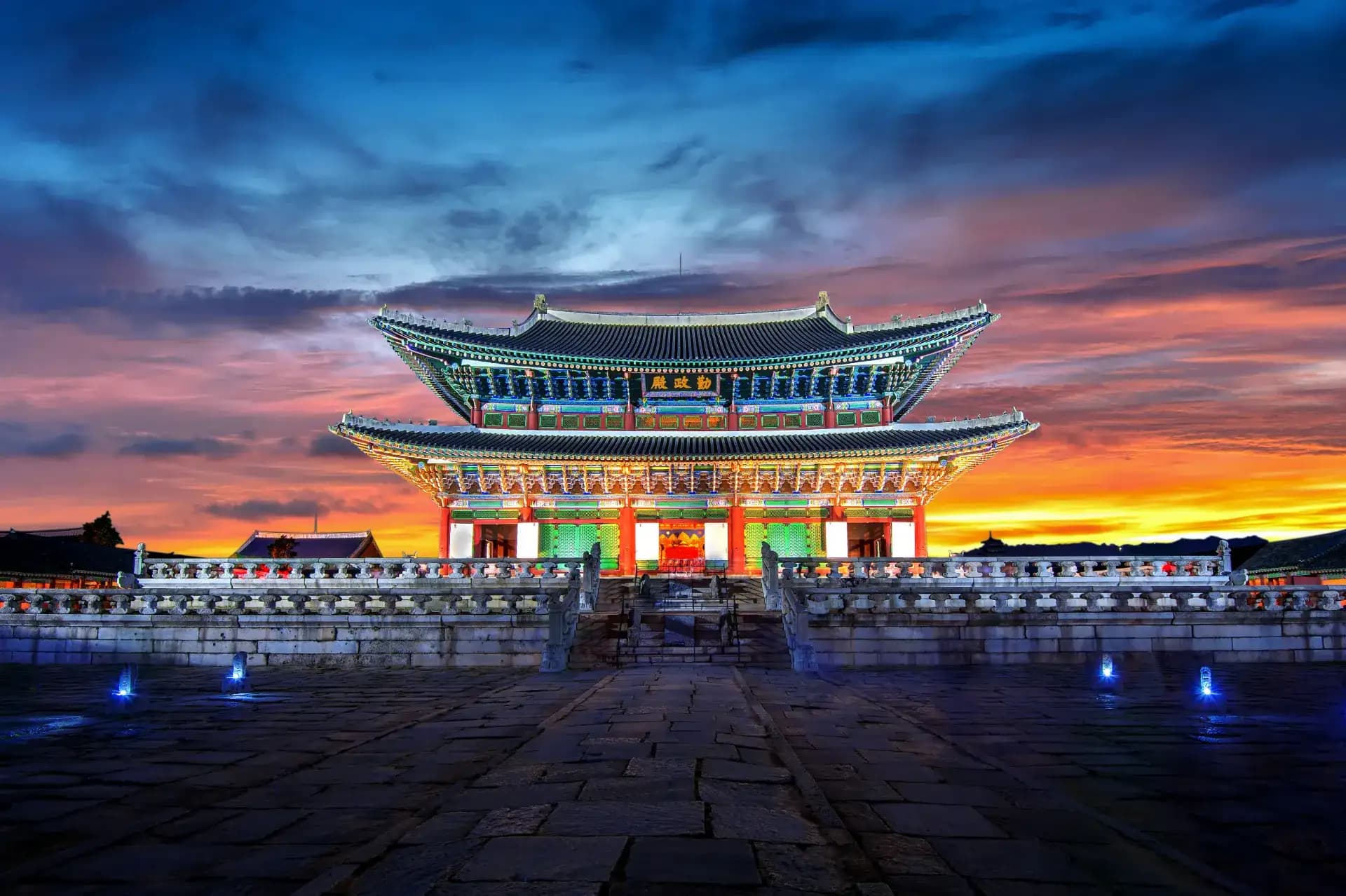
I arrived at Gyeongbokgung Palace at 8 am on March 6, 2024, in a rented hanbok from the shop on Gyeongbokgung-ro (the road adjacent to the east gate, open at 8 am, 15 minutes before the palace itself). The hanbok: the jeogori (the upper jacket, with its distinctive curved collar), the chima (the full-length skirt), and the nubi jacket over everything, because it was 4°C at 8 am in March in Seoul. The palace in the March early morning, in the hanbok, with the Bugaksan mountain visible above the throne hall gate, and approximately 30 other visitors on the entire palace grounds (vs the 3,000 of the April cherry blossom peak, the same palace at the same hanbok cost): the specific Gyeongbokgung quality that the photographs only manage on the quietest of mornings.
The Jeju cherry blossoms on March 8: the Jeju King Cherry (larger flowers, more densely packed on the branch than the Yoshino of the mainland) on the road from Jeju Airport to the Hallasan approach — the trees forming an arch over the road, the blossoms at the first-full-bloom stage (the Japanese term: mankai), the specific March morning quality of the earliest cherry blossom in Korea. I was in Korea at the right time.